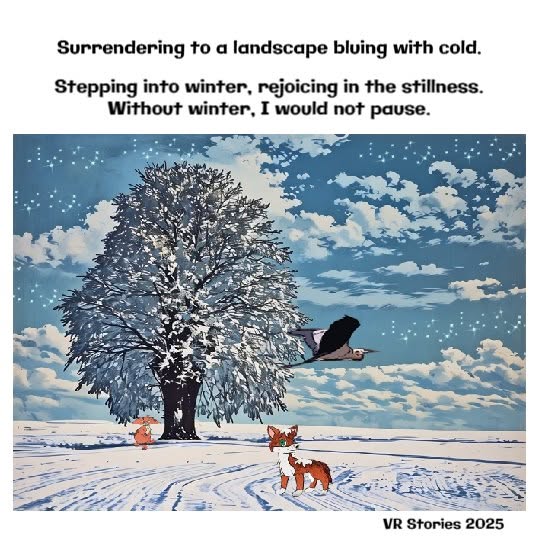
I paused mid-step in my cupboard of a studio, my gaze drawn out across Black Sod Bay. From this vantage point, the water held a deep, ink-like stillness, its dark shadows stretching under the shifting sky. The scent of home baking drifted through the room. My treacle scones puffing up and coming to life in the oven. The rush of my chaotic afternoon suddenly slowed to a crawl, replaced by a sudden warmth that bloomed in my chest. I closed my eyes and was instantly carried back to December, 1970.
I stood in the dimly lit square deepening into blue in the cold, wrapped in a forest green poncho with huge tassels; a garment which at that time was in style with matching beret. I could hear the booming merriment echoing and heard the angelic notes of Hark the Herald. Smiling to myself, I took a deep breath, then sipped my mug of steaming hot chocolate.
I’ve been thinking a lot about Christmas lately, and I can’t help but feel that somewhere along the way, the magic quietly floated away in surrender. Perhaps this is a common feeling as we age, or maybe I am simply lost in the labyrinth of nostalgia. Maybe, I am homesick for a place that I can no longer return to.
Bundled up in oversized scarves and woollen mittens, my dance class and I lead by our dance teacher, headed out into the frosty December night to spread festive cheer through carol singing. We walked down to Main Street and gathered in the community garden by the Church. I’d chosen my forest green poncho over my beloved duffle coat; it felt more festive, and I’d pinned tinsel to the poncho. However, I regretted it almost at once. That duffle coat, with its wooden toggles and heavy wool, had been my faithful shield for years, right through my late teens. It felt less like clothing and more like part of who I was.
Clutching glowing lanterns and slightly crumpled songbooks, we tried to fill the square with Christmas carols. People stopped and smiled and took a moment from their lives to listen.
As the session drew to a close, we moved gratefully toward the Parish Hall. Stepping into the building brought a rush of welcome heat, melting the frost from my numb fingers and deep-chilled bones. There, Mrs. Baxter greeted us with rich, velvety hot chocolate topped with cream and warm mince pies. Mrs Baxter moved with a gentle, unhurried rhythm, humming along to Silent Night. Her soft-white hair tucked into a loose, comfortable bun, warm laugh lines crinkling around bright eyes, and rosy cheeks from standing near a hot stove.
The huge Christmas tree in the corner dazzled and I just could not take my eyes away from its magnificence. Back then Hot Chocolate was a Christmas treat and every sip was comfortingly warm and special.
Although we were singing that night, we were truly dancers at heart. The moment one of the girls slid Dawn’s ‘Knock Three Times’ out of its sleeve and onto the turntable, the mood in the room shifted. As the vinyl crackled to life, it was our unspoken cue to throw off our coats, leap to our feet, and claim the floor.
Our dance teacher had recently chosen this exact track for our group choreography, so the familiar, upbeat rhythm felt like a jolt of pure energy. We didn’t just move; we threw ourselves into the steps we’d practiced so hard, laughing as we synchronized our turns and filled the room with unbridled joy. In that moment, packed together in the warm glow of the room, boogying away felt less like a rehearsal and more like a celebration of being alive and together.
While Christmas Day was the grand finale, it was the breathless countdown that truly captured my heart. There was a distinct, electric magic in the air during those weeks leading up to the day itself, an atmosphere that completely enthralled me and made ordinary winter days feel extraordinary.
School became a bustling workshop of festive creation. I spent hours carefully cutting and folding colourful strips of paper into endless imperfect chains, and crafting homemade cards that left my hands and the floor dusted with a permanent, triumphant layer of glitter. 1970 was my final year of primary school, and our class was rewarded by finally gaining entry into the kitchen to bake spiced mince pies. Covered in flour and collapsing with laughter, I remember proudly pulling my mince pies from the oven, completely unfazed by the wonky pastry and sweet fruit filling oozing over the edges.
Christmas meant the Brownie yearly trip to the Kelvin Hall in Glasgow’s West End. We piled into a hired coach, bound for an evening of sticky-sweet candy floss and toffee apples, before happily spinning ourselves sick on the Rib Tickler and the Waltzers.
I would routinely steal away from the warmth of the living room, drawn by a quiet gravity to the radio, where the air was thick with the melodies of Christmas. Wrapped in the solitude of my room decorated with my attempts at making the most imperfect Christmas paper chains I would simply listen, letting the familiar carols and festive choruses wash over me like a private spell. Those countdown days weren’t just a wait; they were a sensory, joyful world of their own.
Perhaps hot chocolate was a luxury saved only for Christmas, but I never felt short-changed. Today, I feel we have diluted the magic of our rituals by making everything available all the time. Even the physical signs of the season are fading as town council budgets tighten, and the brilliant abundance of Christmas lights dwindles year by year.
Looking back now, I wonder if what I miss most isn’t just those days, but how the world seemed to slow down enough for us to truly be in them.
I may be accused of making an idol of the past or acting as a hopeless unrealistic romantic. But in my defence, I would state that we have traded the magic of the unexplainable for the comfort of the predictable, but surely a perfectly mapped life is nothing but a well-decorated cage
I don’t mean to hark back to some narrow version of the past, or overlook the richness of other traditions and beliefs. What I’m really speaking to is something broader than one holiday. In essence, a lament for the widespread loss of wonder in our fast-paced status driven world. I would say I have a personal living faith as a Christian, but I am someone equally aware of how often ‘Christendom’ has failed to reflect true Christian values.
For context, my family was entirely non-religious. My father was a staunch atheist, and religion played absolutely no part in our household. But despite that the Christmas of my childhood was, above all else, about the collective creation of magic. It was a time when the ordinary world paused, allowing us to build a sensory, joyful reality out of nothing more than paper, glitter, and anticipation,
The modern tragedy is that the ordinary world no longer pauses even for Christmas. There is no respite and the idolatrous wheels of today, economic conquest, greed and selfish individualism keep turning. Commercial pressure to orchestrate a flawless holiday season has exacerbated consumer anxiety, straining many household budgets and compromising the ability to meet basic financial obligations. Stress is poor soil to cultivate wonder. Therefore, wonder is a feeble concept in a checklist of chores and expectations,
I find a deep nourishment in my imperfectly made Christmas decorations. Those flawed ornaments offered a heartening breath of humanity. My heart warms as I recall the slightly lopsided hand-painted baubles I tried to make one year. Those baubles carry an emotional weight that pristine, store-bought decor simply cannot replicate. The imperfections tell a story of time spent, hands at work, and the messy, authentic warmth of home. My paper chains and baubles remind me that the true spirit of the season lies not in flawless presentation, but in the joy of the moments of creations.
I place my cup on the table and a tear pricks my cheek. Outside, Black Sod Bay holds its quiet stillness. We have so much abundance, choice, lights that shine whenever we switch them on. But I wonder: are we richer now, or poorer? Have we traded that slow, glowing warmth for things that sparkle but never truly warm us?

