This is a tale of long ago. A time when the air was thick with a relentless, high-frequency roar that never truly slept. The wind, heavy with grime, swallowed the stories and the songs. It was a time when the towns clanged with factories and noise. The heavy, rhythmic thumping of metal stamping presses and the persistent whine of high-speed cutting machinery, a symphony of progress and production.
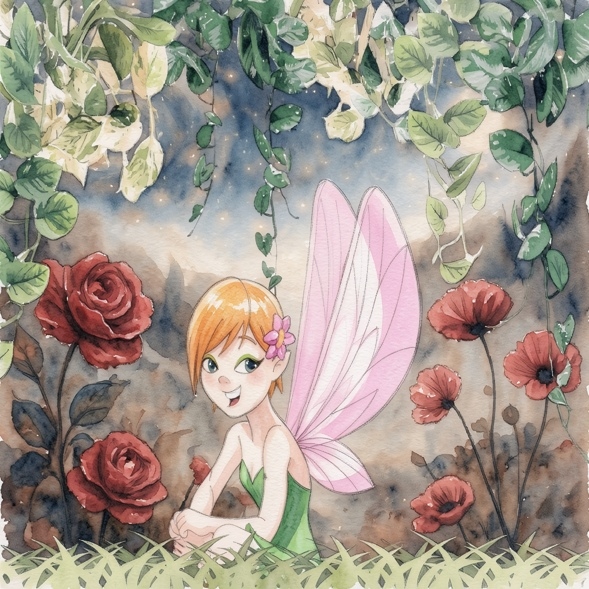
Petalkins of the sweet orange hair sat alone by the river. The cold bit into her bones. The river no longer ran clear; it was layered with greasy oil. The noise made her feel claustrophobic. The once-tranquil pasture had been encroached upon by new builds and was now an industrial suburb of Manchester. Not even her fairy magic could stop the city’s rapid growth. She gazed upwards and wondered whether the fluffy popcorn-shaped clouds, now invisible, could hear her thoughts. She resigned herself to reality. The old ways had gone, and they would never come back.
It was Petalkins who had first caught sight of Fairy Hawthorn, which had been cut to a stump when she had returned with the other faeries after visiting friends in Argyll. Dear old Fairy Hawthorn, who had stood alone for 370 years, was gone. Nothing was sacred anymore, and few people believed in fairies. Once, people were very wary of disturbing the fairy folk, and they were very much alive in speech and song. Petalkins gave out a heavy sigh as she lamented the once-upon-a-time days.
The orchard grasses, cornflowers, and ox-eyed daisies were also gone. The once wild meadow that Petalkins and the other fairies had waltzed on had been plundered to make way for another new factory. Now, if one threw a stone there would probably hit a factory.
Fleta, the queen of the fairies, eyed Petalkins from the vantage point of the last oak by the river. Her heart banged. The felling of Fairy Hawthorn was indeed the last straw. She took it as a sign that it was time to leave.
Blobs of sweat popped on Petalkin’s palms, she felt her shoulders lock, her breath catching as her throat constricted. Blackness came upon her, and she tumbled to the ground. She awoke to the rosy-cheeked Fairy Layla peering down at her. She was the type of fairy who was comforting on a sad day.
“You fainted, girl.” Fairy Layia said, with a look of concern on her face.
“I’ll be fine in a minute; it’s all a shock.” Petalkins sighed.
Fairy Layla couldn’t hide her sadness. She told Petalkins to get ready, Queen Fleta had announced that all the fairies were setting out in the morning.
The next morning was a moody, broody type of day, and rain descended upon Petalkins. The familiarity of place would soon fade. She believed that too much change too fast was not conducive to anyone. Change had a rhythm that offered reassurance with change. Tears buckled behind her eyelids as she attempted to come to terms with the reality of leaving a place once called home. Petalkins was another victim of industrial progress.
This new Industrial Revolution brought in new ideas and a new way of living. Petalkins was appalled that life now rolled with machines. Reason and logic were dominant ideologies, and the belief in fairies was dismissed as superstition; there was certainly no place for that in this new rational world. People were becoming less inclined to believe in fairies, and therefore, her body was withering, starving from the human belief that once fueled her existence.
It came time to leave, and all the fairies assembled by the last living oak, a living, solitary remembrance of a time before time. They were all stone silent.
“We have no place to call home now,” Queen Fleta declared. “Belief in us is diminishing, and the constant, around-the-clock noise is causing me sleep deprivation and heightened irritability. We are moving to the West Coast of Ireland; they still believe in faeries over there.”
Queen Fleta withdrew her gaze as her eyes watered, and for the first time in her life, she felt old. Her bones now ached, and her heart was heavy. Mustering up the little strength she had, she flew up in the air, leading her troop to the West Coast of Ireland.
Timing could not be any worse. It was the night of 6th January 1839, an event that would go down in history as The Night of the Big Wind. The fairies were met with a severe hurricane-force storm that was devastating Ireland. The fairies locked arms against the gusty force, yet they continued to be tossed about.
Now it must be said that the West Coast of Ireland has its own indigenous ‘other folk.’ Unlike the fairies in Britain who have wings, in Ireland, the ‘other folk’ are wingless.
The leprechauns who lived in Achill Island were not too pleased when they discovered that a group of English fairies was going to settle in what they considered their territory. Rooted in the dawn of time, they viewed interlopers with cold, unrelenting hostility
The thing about leprechauns is that they may be tricksters, but they are certainly not rash, and they arrive at decisions with great thought. With a simple plan to unleash the elements, they became enshrined in folklore as the authors of that night’s mighty storm
When Petalkins and the other fairies reached land, they dropped to the ground. The continual volley of slanting rain had cut into their flimsy clothing, causing bruising on arms and legs. The thick, heavy icy droplets that had slammed down onto all the fairies’ hair made it look like rats’ tails.
“I want to go home.” Fairy Layla sobbed.
But there was no home to go back to.
Petalkins looked around, and all she could see were roofs snatched from thatched mud houses, and the area resembled a combat zone as far as her eye could see.
At first light, the fairies began their search for a suitable tree to reside by. It didn’t help that many of the trees had fallen, victims of the storm, and were sprawled out on the ground. The ground was so wet that the worms had surfaced to breathe. Their soggy clothes stuck to their bodies, and dots of sticky sweat made them feel so uncomfortable. Hours passed, but eventually they came across a solitary hawthorn in the middle of a field, its branches bare and barren.
However, the Hawthorn did not welcome them like the Fairy Hawthorn back home. Instead, its branches dropped to the ground in a defiant gesture of unwelcome. The fairies were bone weary and too tired for conflict, so they forcibly entered through its roots. Tiredness came upon all, and they all fell asleep where they landed.
When early dawn arrived, the fairies woke to find a whole gang of leprechauns surrounding the tree. Fear came upon them. They had heard stories about the wrath of the Irish ‘wee folk without wings.’
Queen Fleta had become forlorn; her beaming smile had gone. The loss of the place she loved had pained her so much that she had been rendered silent. So, Fairy Layla took it upon herself to go out and try to appease the situation.
“We wish you no harm,” she said. “We are homeless and have nowhere to go. We are no threat to you.”
The leprechauns looked upon Fairy Layla with pity, and a short balding leprechaun called Red Bow stepped towards her and spoke.
“You can stay for tonight, but in the morning you must go. There is a place called Murrevagh just down the road where you can reside.”
And with those words, all the leprechauns disappeared within the blink of an eye. It was at that point that the hawthorn tree lost its hostility towards the fairies and raised its branches upwards to the sky.
“My magic has returned!” Petalkins chimed, dancing on her toes.
“So has mine,” declared Fairy Layla.
In the morning, the fairies made their way to Murrevagh in Co. Mayo. Petalkins’s eyes widened when she saw the chestnut trees and the deep-pink honey-scented heather. The sense of home was beginning to settle into her bones. She gazed across the dusky pink sky, a smile spanning her lips. Soon, the sky would be alive with swallows, and sweet-smelling flowers would erupt from the hedgerows.
The day was not without sadness. Queen Fleta could not bring warmth into what she considered a landscape starkly unfamiliar and cold. Despite being surrounded by beautiful landscape, she felt stranded, mentally retreating to the comfortable, familiar routines of her old life. Her heart could not hold this sadness, and she passed away surrounded by the faeries who loved her.
Petalkins, engulfed in muted shades of grief, felt hauntingly empty. The loss of her queen, the fairy who held all her secrets and anchored her through life’s storms, left a profound, aching void. She stepped into the new home that she had made in one of the chestnut trees. She placed the kettle on the stove, and she did that without any magic.
If you are of the good fortune to visit Murrevagh, which lies on the wild Atlantic west, and despite the fairies being known as benign, I would hereby caution you to be wise and respect their territory. After all, it is always good to be kind.

